
ORIGINS
Ritual Design Series Pt. 1

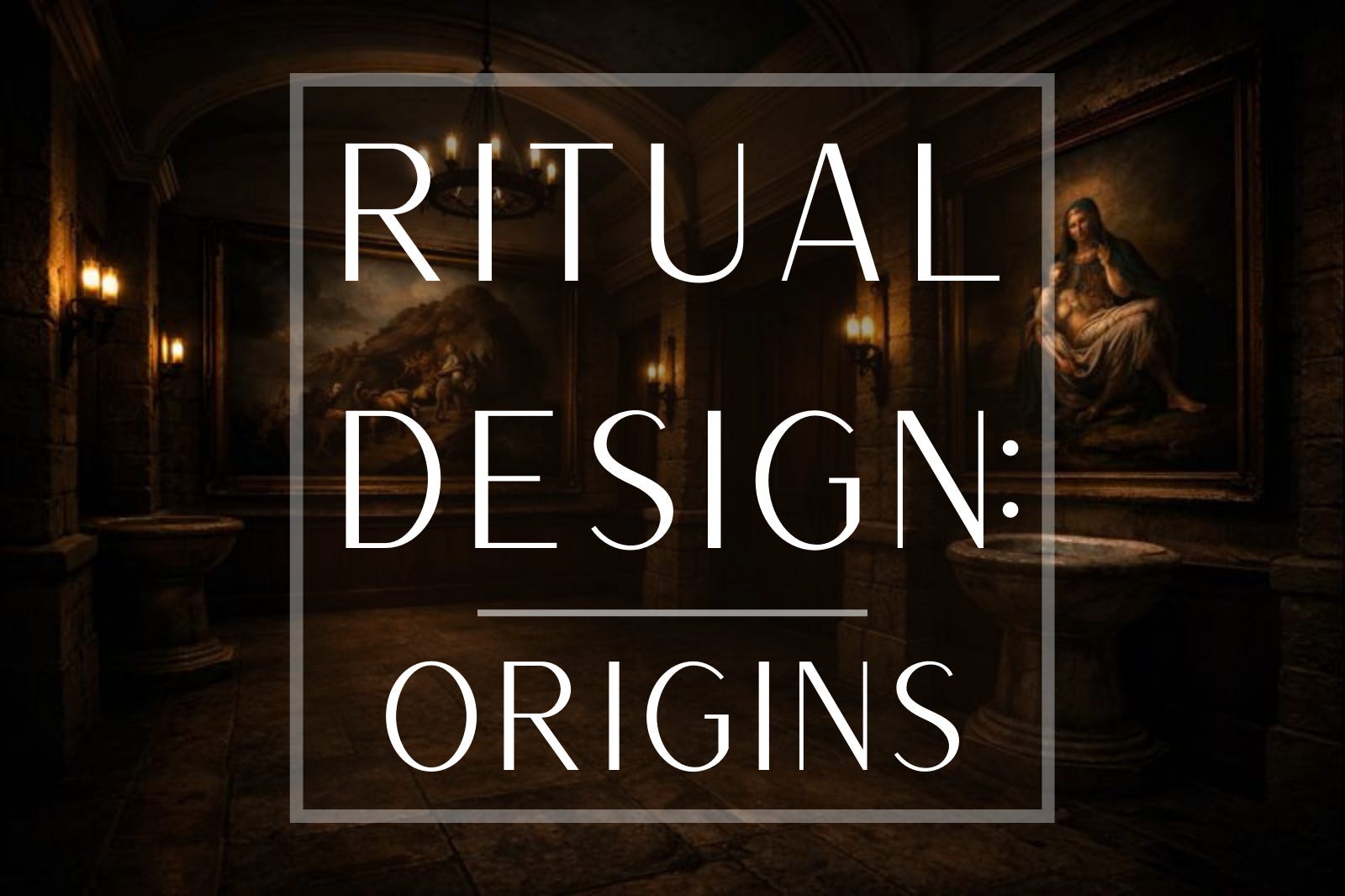
The entry hall was more ancient, to my young eyes, than it had any right to be. The unassuming building, from the outside, appeared constructed of the standard materials of the cookie cutter neighborhood it blossomed beigely from.
It had straight sides, rectangular doors, and an unapologetically brown facade. The roof had a completely unremarkable slope, its only discerning feature its overhanging entryway, where the lazily sloping roof broke formation from its right-angle ranks to form a sleigh-like protrusion.
Here, congregants were sheltered as they exited their vehicles, stepped out of the profane world, through those unremarkable doors, into something ostensibly sacred, and submitting themselves to piety, sanctity, and their own personal image of that house of [G]od.
The entry hall, as I was saying before so rudely interrupting myself, seemed ancient.
Where the shell of the building was all standard suburban siding, slightly too-narrow windows, and painted metal doors, you stepped into a hall of stone and warm, richly stained wood.
The floor was all oversized stone tiles, which proceeded to climb a third of the way up walls that seemed too tall for the building they sat within. Light fell mutely from hanging sconces on chains whose rays bounced off of a light blue ceiling, sheathed by bright, ornate, over-sized, white trim that cleanly swept into the muted tones of the walls, deleting the harsh corners, and lending an almost subconscious sense of continuity to the foyer.
On one wall, a massive likeness of Noah, loading the arc, wherein lions, giraffes, and deer, proceeded orderly up a ramp - side by side. This painting and it’s counterpart, a Pieta on the opposing wall, were something a perhaps-never-known and certainly-unremarkably-mediocre graduate student exploring the lighting style of Rembrandt had ambitiously layered of oil paint on two 9x12 canvases.
They were not worthy of the museum lighting or the heavily distressed golden frames with which they were so elevated, but that elevation, in and of itself, leant them an air of majesty they would never have enjoyed in the austerity of a museum. Here, they were giants without comparison, they were the loadstones of our passage from the profanity of the American into the ancient liminal space of the Catholic, the holy trinity. Beneath each rested a large stone pillar with a bowl carved into the top, each filled with the sacred (and for some reason, salty) tears of the Catholic Church, holy water.
Before passing through the unassuming outer doors, it was customary to remove one’s hat.
Before passing through the imposing gates leading into from the vestibule into the church proper, it was customary to dip one’s grimy, mortal, fingers into the juice of ablution and make the sign of the cross over your body mouthing, quietly, the ritual submission of your time in the temple: “In the name of the Father”, whetting your brow, “and the Son”, touching your solar plexus, “and the Holy Ghost”, tapping once lightly each over your heart and the space that God had so briefly considered placing a second one, the quiet hollow of the right precordium.
There was a smell to that vestibule that I have never found anywhere on earth but the vestibules of some Catholic churches.
I have mixed perfumes for priestesses, colognes for dignitaries, and scents for candles.
I have tasted the immaculate culinary conceptions of countless cultures and been hosted by the gracious mothers of families around the world. I have sat, awestruck, in the holy temples of gods and lineages whose names I still don’t know, and never, anywhere, have I encountered this smell.
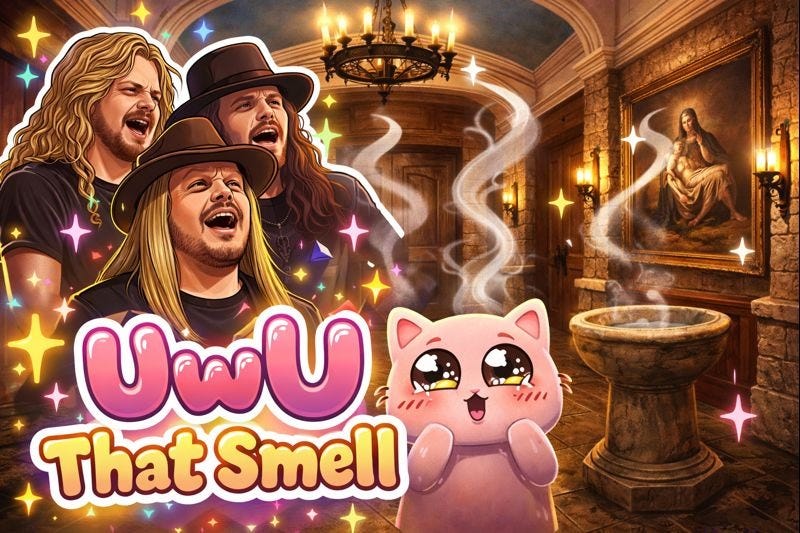
I am sure it isn’t magic, I am certain that, given the attention I am paying to it now and a perfumers kit, I could begin to recreate it, were I to sit in a clean room with access to that vestibule, but, here, it was naturally occurring.
Something in the wild, generational magic, unintentionally birthed of two thousand years worshipping at an altar to a singular god and his undying and, yet, once dead son somehow conjures this olfactory anomaly that fills your nostrils.
It is something like clean granite and the scent of salt, mixed with the memory of frankincense, and the nervous sweat of a freshly washed body. It clings to you like your grandmother’s holiday perfume, or that all-too-familiar mantle that wraps around you at a mortuary, the scent that might briefly steal your breath and inspire a rush of stars and blackness tugging at the outer reaches of your vision as you step into a hospital room in the ICU.
It is wholly unique. I think that to recreate it, even now, would be somehow… a betrayal of this sacredness in my youth.
With that second act of contrition, wrapped in the soft mystery of that unnameable scent, I would enter into the church, where the ceiling again soared, now even further, in a manner that seemed in direct refutation of the architectural limitations of its structure.
A skylight painted the altar. The windows, hidden from the parking lot and street by tall pines, colored scenes of saints and disciples doing saintly and disciplined things. The pews all of that same richly stained wood, polished by the oiled hands and tired asses of thousands of weekly penitents.
The floor is a darkened tile, covered only in the procession to the altar, by a rich red carpet whose color I have associated with the death of Christ since my youth. Before stepping into a pew to be seated, I would dip one knobbly knee to the floor, genuflecting to the altar, behind and over which hung a crucified white man, wearing a crown of thorns, painted garishly in his own blood. He cut a rather imposing figure, hanging there, despite his pitiably emaciated state.
His body still the rosy color of life, as you could almost see the deathly pall of grey creep from his limbs toward a heart that had, mercifully, ceased beating ( a trick of the light?). So, kneeling, I would, again, make the sign of the cross before taking a seat. To wait for the ritual to begin.
Of course, I know now, it had already, long since, begun.
If you have ever been to a Catholic mass, especially a Latin mass, you may know the sacredness that lives in that space. Perhaps, if you grew up in a Catholic family, you are beginning to remember something that you lost, something you have told yourself and many of your friends, even your family, you have left behind, willingly diverged from.
You are reformed, secular, agnostic, atheist.
I ask you to let this image breathe life into the memory your body holds of something beautiful, something sacred and mysterious, divorced from the many personal and political wrongs of deeply troubled religious institutions.
You are called to awaken your longing for the simple surrender to belief.
I ask you to remember how it feels to believe. Or to imagine what it feels like to collapse into faith with the level of submission a 55 year old plumber from Des Moines, Iowa feels as he kneels before a 70 year old man who has committed his life to the study of an unknowable God. In a temple built of his paychecks. Surrounded by a congregation of devotees who would be strangers.
I invite you to imagine the unburdening of his soul as he confesses his moral failings to a 20 year old boy, freshly ordained, through a checkered screen, and is awarded a path to redemption. 15 of this prayer before breakfast, 30 of this prayer before dinner, and a nightly petition of forgiveness to his imaginary depiction of his lord and savior, some 2000 years in the grave, directly before he resigns himself to slumber.
I want you to remember the hunger you have to be filled up with faith in something greater than yourself, the economy, and the society you just so happen to inhabit. A longing to be filled with faith in a plan, in a fate, in a destiny. To be absolved. To be forgiven. To submit and be empowered to forgive your self.
Take a moment to feel the words of a language you have never known fill your mouth and coat your tongue, as you speak practiced sounds back to that bent-backed priest, under that imposingly naked corpse, parroting this part of the service for the 1000th time, with only a vague understanding of what the sounds mean. You are speaking the dead language of that dead man’s oppressors as you feel the strength of continuity and communitas well in your chest, surrounded by the voices of three-hundred other penitents.
The Catholic Church’s mastery of ritual is, to me, perhaps the single most pervasive modern example of ritual magic and transformative experience design. It rests at the pinnacle in its rites of passage, honed by millenia of refinement in, for, and by cultures around the world. They are practiced on every continent, by over one billion Catholics, and are the very definition of what our civilization understands as the gold standard of ritual design.
But, why are they so successful?
My journey as a ritual designer began in this church. For three years I attended mass here two to three times a week, one of which was in Latin. We did not have Latin class in third grade elementary schools here in the midwestern heartland of the United States. For all intents and purposes, I was, in fact, speaking in tongues. For nearly an hour a week. Every week. For three years. And… something I couldn’t possibly have known then, something I would have strongly disbelieved, is that… well, I miss it.
Even as I fell out of love with the God of Catholicism, even as I began to regret and then loathe the way they leveraged the story of an anti-hero inspired by free love and forgiveness, even as I began to learn the seven altars of Islam, attend Temple and Synagogue, and start my nascent meditation practice under the tutelage of my dying aunt, I never lost respect for the high, living, art that is the Catholic Mass.
The Catholic Baptism.
The Catholic Confirmation.
The Catholic Confession.
The Catholic Funeral.
Even now, divorced some twenty-five years from the church, I can smell the vestibule. I can feel the pew’s padding under my knees. I can taste the bitter wine that was the transmuted blood of Christ on my tongue, and remember what it was to believe.
Today, I strive to design transformational experiences that are wholly divorced from the dogma of any individual religious or secular institution.
Yes, I direct a non-profit.
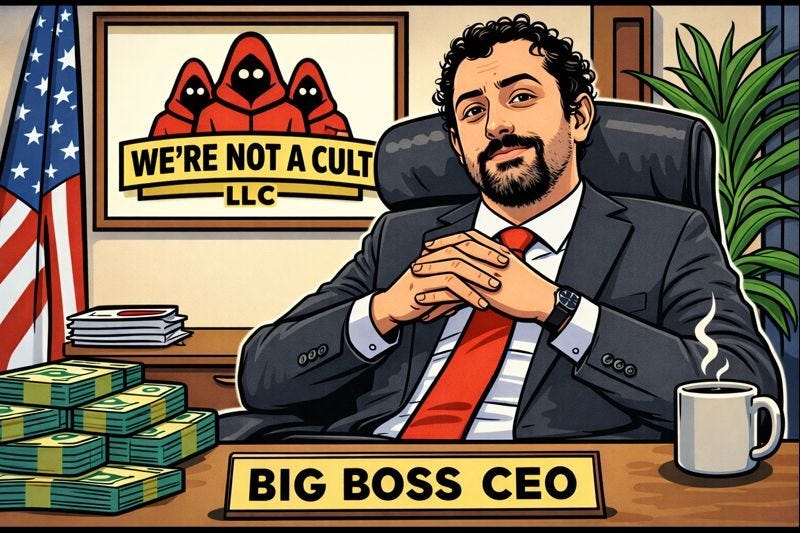
No, it isn’t a cult.
Yes, there is an application process for participation.
It is extensive.
No, we don’t have a village.
Yes, I am building one.
No, that village doesn’t have anything to do with the
cultnon-profit.Yes, it is confusing being developed under: WNC LLC
(We Are Not a Cult LLC)
Yes, there is also an application process to purchase land in the community.
Yes, that one is also extensive.
*beeeeg sigh*
Many of my rituals borrow from ancient lineages and traditions around the world. I appropriate (yes, I am owning that) the gods, spirits, and stories from pantheons no longer worshipped, alongside characters from the parables of Christ’s life, mantras, and philosophies taken (very) profanely out of context.
In an evening, I may call down the corners at a north facing altar in the woods, before submitting my congregants to the judgement of Maat.
We may invite them to inhabit the avatar of Odin as Kali wraps them in shibari to hang from the world tree, confess their sins to a sin eater, and sacrifice their eye that they might admit the truths they keep from themselves, envisioning a new future.
A death god may offer them sacrament from the body of Christ as they prepare to carry their own cross, where they will be hung next to other silent beggars, to watch the first sun rise of the rest of their lives.
They may drink the blood of Fenrir, before facing a Socratic interrogation on the meaning of life in a duel with Mercury. Or paint their faces with the ashes of a phoenix before imbibing a sacrament to face their own death and inevitable rebirth.
I may call forth their own Catholic roots with scents of Frankincense and background sussurus of a Latin mass, or create a cathedral of their childhood, complete with their boyhood toys and the meal their mother would cook specially for them on their birthday, pop music from the 60s selling the lie before they confess all the things they wish they could whisper to their young selves. Played by a little boy in striped pajamas, wearing a mirror mask in which they see their own face… the man that boy became and still lives within.

I have been called to fake abductions for clients so that, for once, they can surrender, as I remind them both that and why they still fear death. Allow them to admit why they deserve to live after their bank accounts have been (falsely) drained, and, finally, confess what it is they truly want to pursue with their lives as they finally begin to see the wound they’ve been packing with fetid currency in lieu of emotional gauze.
One of my participants may fight to complete an impossible task, in a bank vault filled with the voices of their closest friends cataloguing their misdeeds. Witnessed by their partner, so they can finally believe it isn’t their mask of competence their partner(s) love, that even in their ineptitudes, they are accepted, cherished, held.
In all of these places, spaces, and experiences, I design using a series of principles, elements, and building blocks.
Because the architecture of successful initiation, transition, and confirmation rites lives at the intersection of anthropology, sociology, psycho analysis, theology, and theater, it has taken me decades to feel confident beginning to catalog them in a way the seems coherent enough to impart to other seekers, designers, stewards, and would-be ritual elders. In some ways, I feel a sense of accomplished mastery, in others, admittedly, I still feel a toddler playing with his father’s oils, painting allegories with my fingers over peeling wallpaper.
Over the next few months, I will explore many of the ways I disdain the false idolatry, snake-oil, and pomp of pop-ritual design, and then hypocritically employ them myself.
I will aim to point at their and my own failings, dangers, potentials, and successes.
I hope to begin unravelling for you what elements and themes are at the heart of successful ritual design and ritual theater, using examples from my own life, and the lives of my colleagues, as well as the research of scientists and philosophers who have made life works of this study over 1000s of years.
I will make a strong case for the negative space of ritual in our modern lives, and how things like gang-initations, sorority hazing, cookie-cutter weddings, and death doulas, are trying and failing to fill the voids left by transitory and initiatory ritual experiences.
Over these next few musings, I will explore what it means to inspire belief in a false deity created only as a vessel for that belief to inhabit. And why I did it.
I will make a few strong claims about the absolute necessity of submission in the success of ritual and the fragility introduced by banishing humor from ritual spaces. I will even make a compelling case for why, when designing rituals, exclusion is far more important than inclusion, as we look at the differences between liminoid and truly liminal experiences.
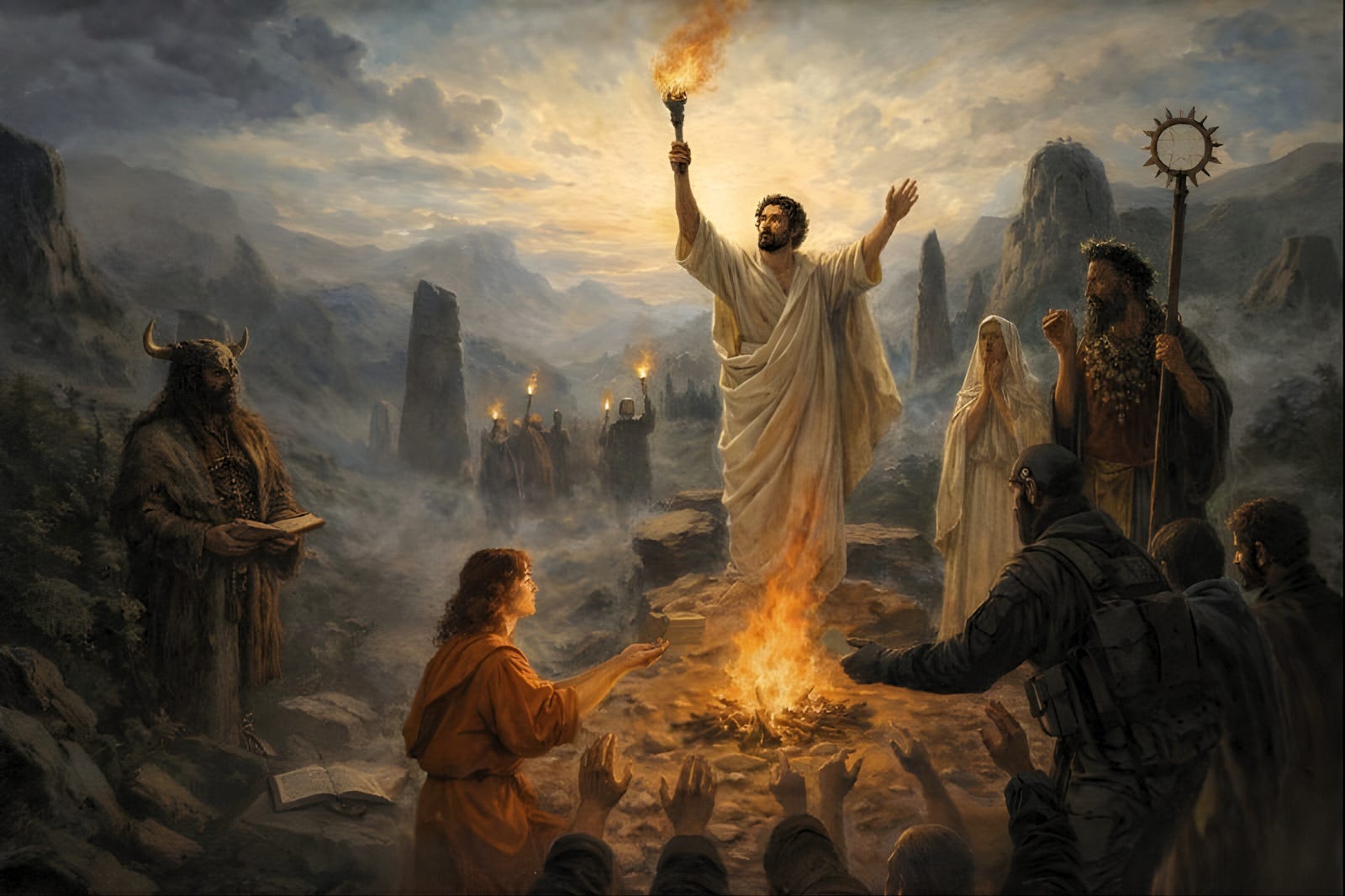
I am going to do my best to impart to you the soul of my own ritual philosophy through these writings:
today,
we must design
and enact
our own rituals.
we must step into,
author,
and live our own myths.
it is more important than ever
to choose to believe,
even in the irrational.
faith itself
can be an act
of rebellion
worth making.
the most important thing
you may ever do
is choosing
to live a story
worth telling.
Next essay, on Geof’s shit: why some of us don’t choose ritual so much as get quietly conscripted by it.
We’ll talk compulsion, control, OCD, and how the same machinery that once kept me safe eventually taught me how to design rites on purpose.
This is Part 1 of a 5 Part Series on Ritual Design.
Origins
Compulsion
Separation
Liminality
Return